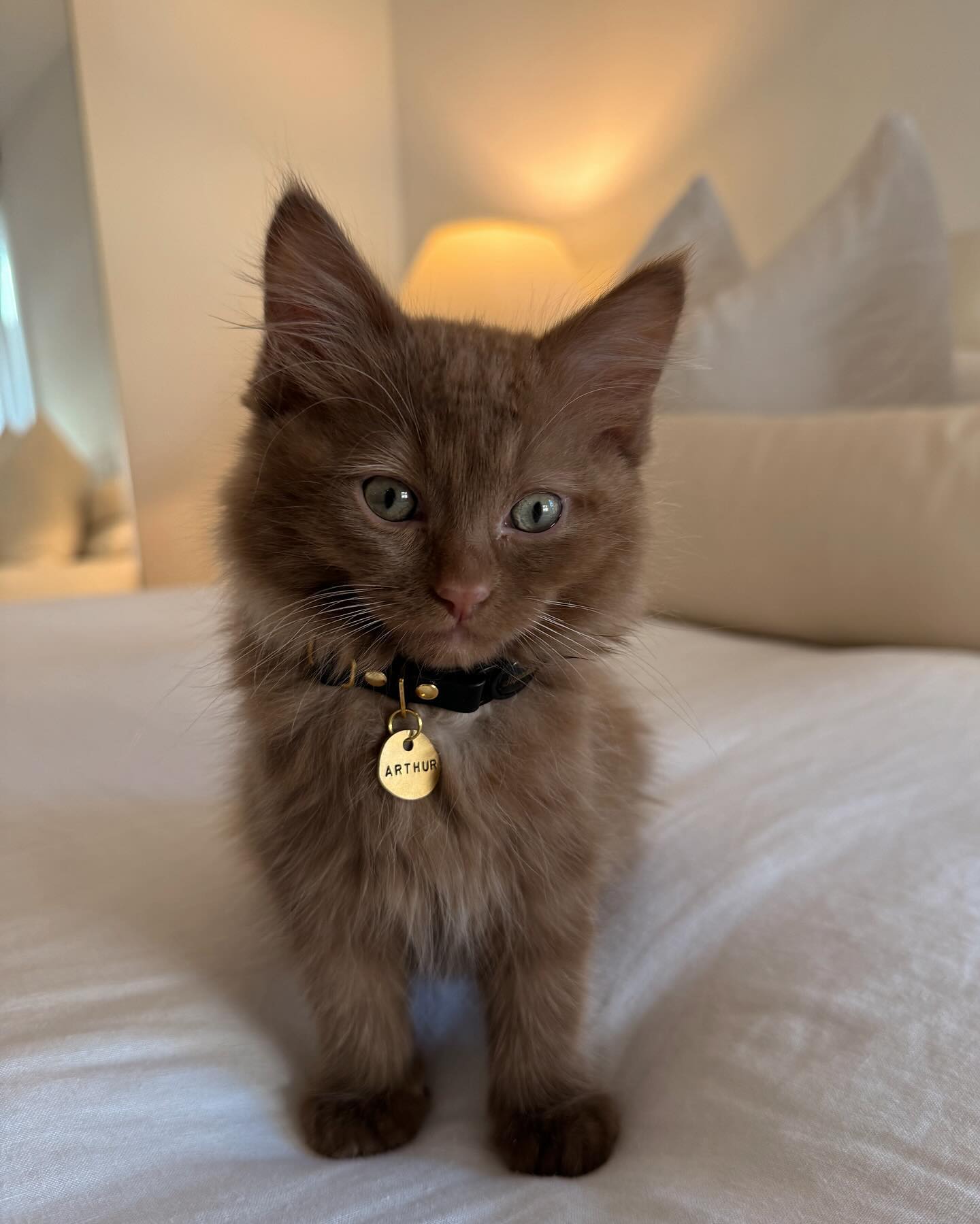
Grooming & Coat Care for Your Kitten
Grooming needs vary across our four breeds — from the Persian's spectacular daily-brushing longhair coat to the Maine Coon's flowing semi-long fur, the Ragdoll's silky colorpoint coat, and the Bengal's short, low-maintenance pelt. What they all have in common: start young, be patient, and make grooming a calm, bonding ritual rather than a chore. Your kitten will grow to love the attention.
The Most Important Goal
For longhair and semi-longhair breeds — Persian, Maine Coon, Ragdoll — every grooming routine comes back to one principle: prevent mats before they form. A mat left untreated grows tighter, pulls the skin, and eventually must be shaved out. A five-minute daily brush prevents all of that. For Bengals and Persians with shorter coats, the goal is simpler: keep the coat clean, remove loose fur, and build a calm association with handling. The earlier you make grooming part of your daily routine, the more your kitten will accept and enjoy it as normal handling.
Daily Brushing
- Choose a wide-toothed metal comb or a slicker brush designed for longhair cats. Start with the comb to work through the coat, then follow with a pin brush or slicker to fluff and smooth.
- Work in sections — start at the head and neck, move to the chest and belly, then the sides and back, and finish with the tail. Always brush in the direction of hair growth.
- Be especially gentle around the armpits, groin, and behind the ears — these are the areas most prone to matting on a longhair Persian.
- If you find a tangle, hold the base of the fur close to the skin with your fingers before combing through it. This prevents painful pulling on the skin.
- Keep sessions to five or ten minutes, especially when your kitten is young. End on a calm, positive note with praise or a small treat.
Daily Eye Cleaning
- Persians and Persians have brachycephalic (flat) faces with tear ducts that do not drain as efficiently as longer-muzzled cats. Discharge naturally collects in the inner corners of the eyes and must be cleaned daily.
- Use a soft, damp cloth or unscented pet eye wipe. Gently wipe from the inner corner of the eye outward. Use a fresh area of the cloth for each eye to avoid cross-contamination.
- Brown or reddish staining around the eye area ("tear staining") is common in light-colored Persians and Exotics. Consistent daily cleaning minimizes staining significantly.
- If discharge is yellow or green, or if your kitten is squinting or rubbing at their eyes, contact your veterinarian — these can indicate infection.
- Make eye cleaning the very first habit you build. Do it every morning, before grooming, so it becomes automatic for both of you.
Bathing
- Most Persians benefit from a bath every four to six weeks. A clean coat mats less easily and stays healthier than one that accumulates skin oil over time.
- Use a shampoo formulated for cats — never human shampoo, which disrupts a cat's skin pH. A gentle whitening shampoo works well for light-colored Persians.
- Wet the coat thoroughly with lukewarm water, working from neck to tail. Apply shampoo and lather gently. Rinse completely — any residue left in a dense coat will cause mats.
- Towel dry gently, then use a low-heat blow dryer while combing the coat out. Never leave a Persian damp — the thick undercoat stays wet for a long time and will mat as it dries if not combed through.
- Introduce bathing as early as possible. A kitten who is bathed from eight to ten weeks of age accepts it calmly throughout life.
Mat Prevention Is Easier Than Mat Removal
Once a mat forms and tightens close to the skin, trying to comb it out causes real pain. If you encounter a tight mat, do not force it. Instead, use a mat splitter or fine-tipped scissors to carefully cut through the center of the mat, then comb the halves apart. For very large mats, a professional cat groomer or veterinarian can shave them safely.
The best strategy is simply prevention: brush every day for longhair breeds (Persian, Maine Coon, Ragdoll), pay extra attention to the friction-prone areas like armpits, groin, and behind the ears, and never skip more than two days in a row. During shedding season in spring and autumn, increase brushing to twice daily to manage the extra loose fur. Persians and Bengals can typically be managed with one or two brushings per week.
Breed-by-Breed Grooming Tips
Persians & Bengals
Persians have a plush, dense coat that benefits from weekly brushing and daily eye cleaning. Bengals have a short, sleek, minimal- maintenance coat — a weekly brush keeps it glossy. Both still need regular nail trims and handling practice from week one.
Maine Coons & Ragdolls
Maine Coons have a semi-long, water-resistant coat; Ragdolls have a silky semi-long colorpoint coat. Both need daily brushing to prevent mats, with extra attention to the undercarriage, armpits, and neck ruff.
Brush Before Bathing
Always comb through the coat and remove all tangles before a bath — for any longhair breed. Water causes mats to tighten instantly; a small tangle becomes a true mat once it gets wet.
Professional Grooming Is an Option
Many longhair-breed owners schedule a professional groomer every six to eight weeks for a full bath, blow-dry, comb-out, and sanitary trim. This supplements daily brushing rather than replacing it.